
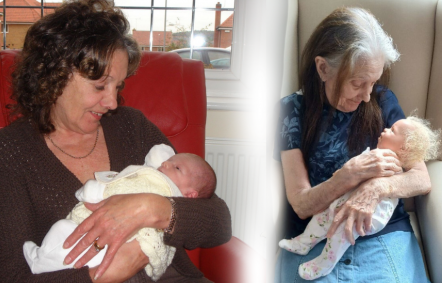
For those living with dementia, engaging in activities connected to life experiences can bring comfort, reassurance, and a reminder of who they are. By tapping into memories, skills, and roles that have been important throughout their lives, these activities can help reduce anxiety, encourage focus and calm, and create opportunities for meaningful connection with others.
This is especially true for Margaret, a resident of Branthwaite Care Home, whose life has always revolved around caring for children. From the moment she left school at 15 and started working at Burslem Day Nursery in 1957, she found joy in being around children and caring for little ones wasn’t just her job — it was part of who she was.
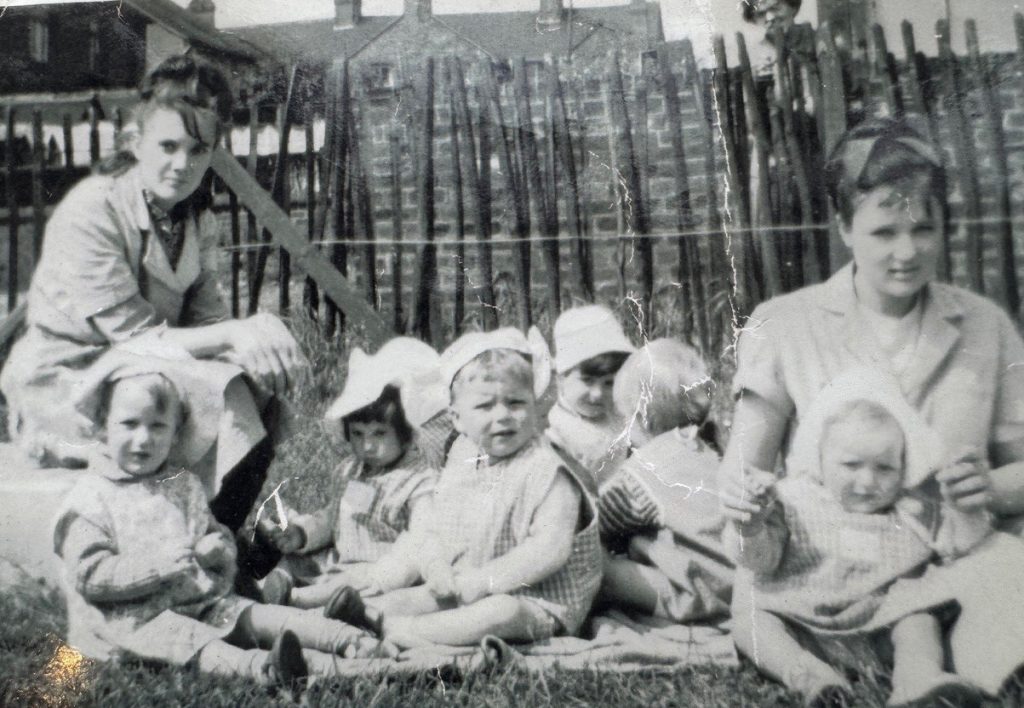
1960’s, Margaret far left caring for children at Burslem Day Nursery
When the Stoke-on-Trent Education Authority introduced pre-school programs in many junior schools, it gave Margaret an exciting new opportunity. She was able to bring her love for working with young children into a school setting. Over the years, she worked in several schools across Stoke-on-Trent before settling at Saint Mary’s in Tunstall in 1989, where she remained for 45 devoted years until her retirement in 2002.

Retirement party 2002
Although retired, in truth Margaret's caring role didn't end. She continued volunteering with the Scouts, founding a Beaver Group in Tunstall. She was also a longstanding and active member of Christ Church, serving as a baptismal visitor. In that role she visited families to talk about baptisms — another beautiful extension of her lifelong connection with babies and young children.
In 1973 she became a mother herself, and later a grandmother in 2006, 2008 and 2014 - roles which she embraced with the same love and enthusiasm that defined her career.
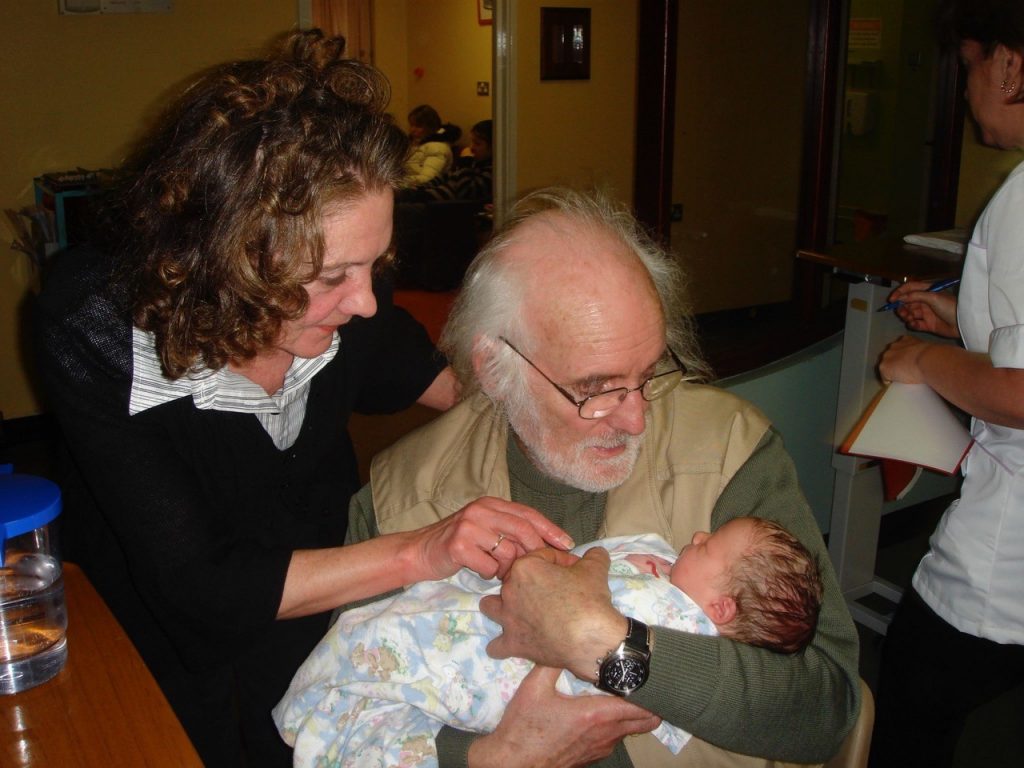
Doting Grandmother
Today, Margaret is living with dementia. While some memories have faded, her lifelong instinct to nurture remains strong. Margaret spends much of her day holding a lifelike comfort companion — a realistic baby doll that she keeps close. Often staff will observe her gently swaddling the baby, changing its clothes, and folding the tiny outfits the team provides for her. These simple acts bring her calm and focus, and it’s easy to see the joy on her face as she cares for the doll with the same tenderness she once gave to the children in her care.
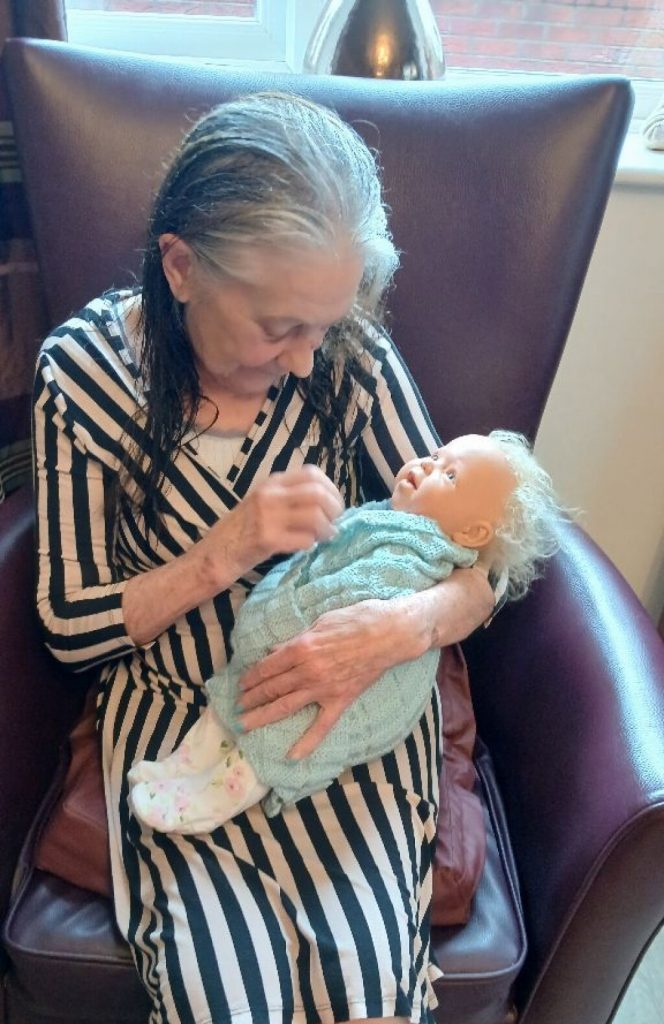
From Doubt to Understanding: Doll Therapy in Dementia Care
Margaret’s story challenges some of the common misconceptions surrounding doll therapy in dementia care. At first glance, seeing an older adult holding a doll can feel unexpected. Families may worry that it appears childish or undignified. Margaret’s own family admit their initial reaction was one of surprise, with her son Steve commenting,
“I must admit, when I first saw Mum with a doll, my reaction was one of shock to see her with something I associated as a child’s toy. This was echoed by her grandchildren who also were quite shocked to see their grandma with a doll. Now, we’ve all come to see the benefit that has to my mum. How the interaction keeps her calm and focused on something other than the dementia. You can see the joy on Mum’s face and I believe it takes her back to better memories”
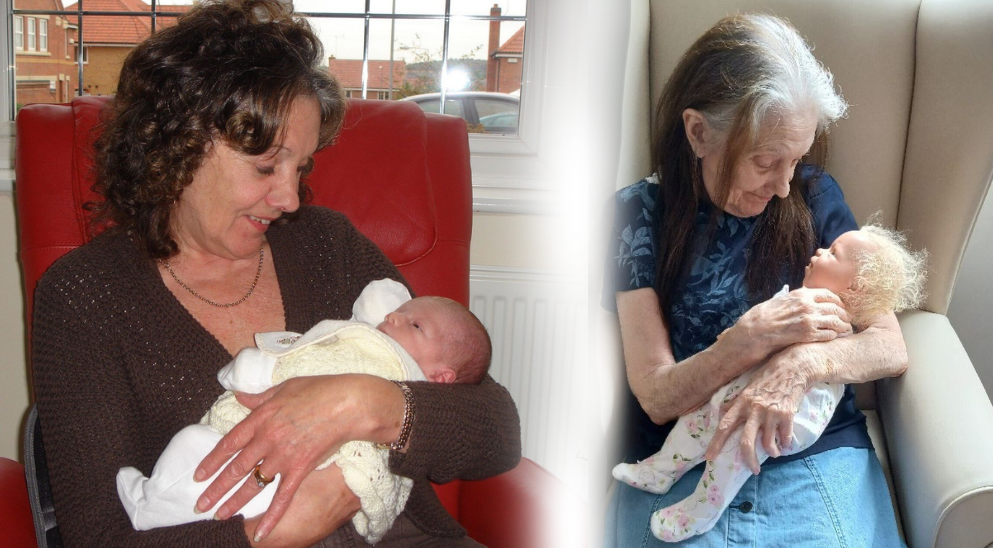
Understanding quickly replaces uncertainty
Seen in the context of Margaret’s life, her comfort companion is far more than a toy — it is an extension of who she has always been. For 45 years, she devoted herself to caring for young children, shaping her career, her community work, and her sense of purpose around nurturing others. While dementia may affect memory, it cannot diminish a lifetime of instinct, compassion, and emotional connection.
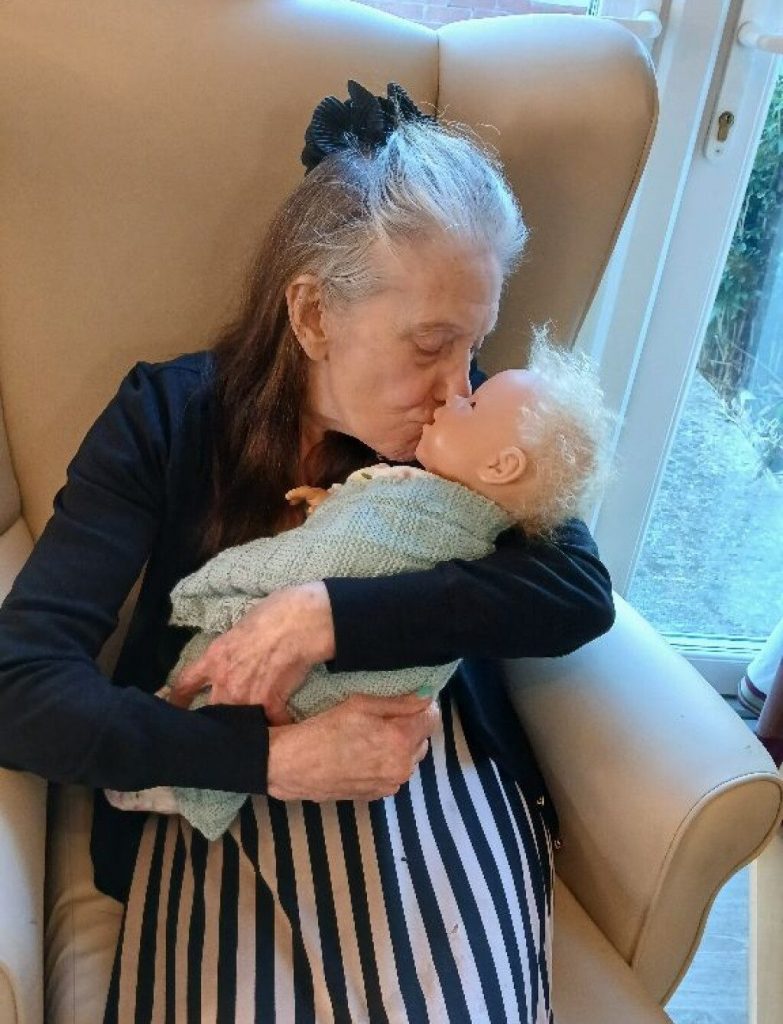
Doll therapy — sometimes referred to as comfort companion therapy — is a recognised person-centred approach in dementia care. For some individuals, especially those with strong caregiving histories, it can
Reduce agitation and anxiety
Provide comfort and reassurance
Encourage positive social interaction
Support emotional expression
Reinforce identity and sense of purpose
In Margaret’s case, the therapeutic value is clear. The interaction gives her something meaningful to focus on beyond her diagnosis. It honours her past rather than diminishing it.
Doll therapy shows that supporting people with dementia isn’t about what they’ve lost, but about nurturing who they have always been.
A lifetime of nurturing